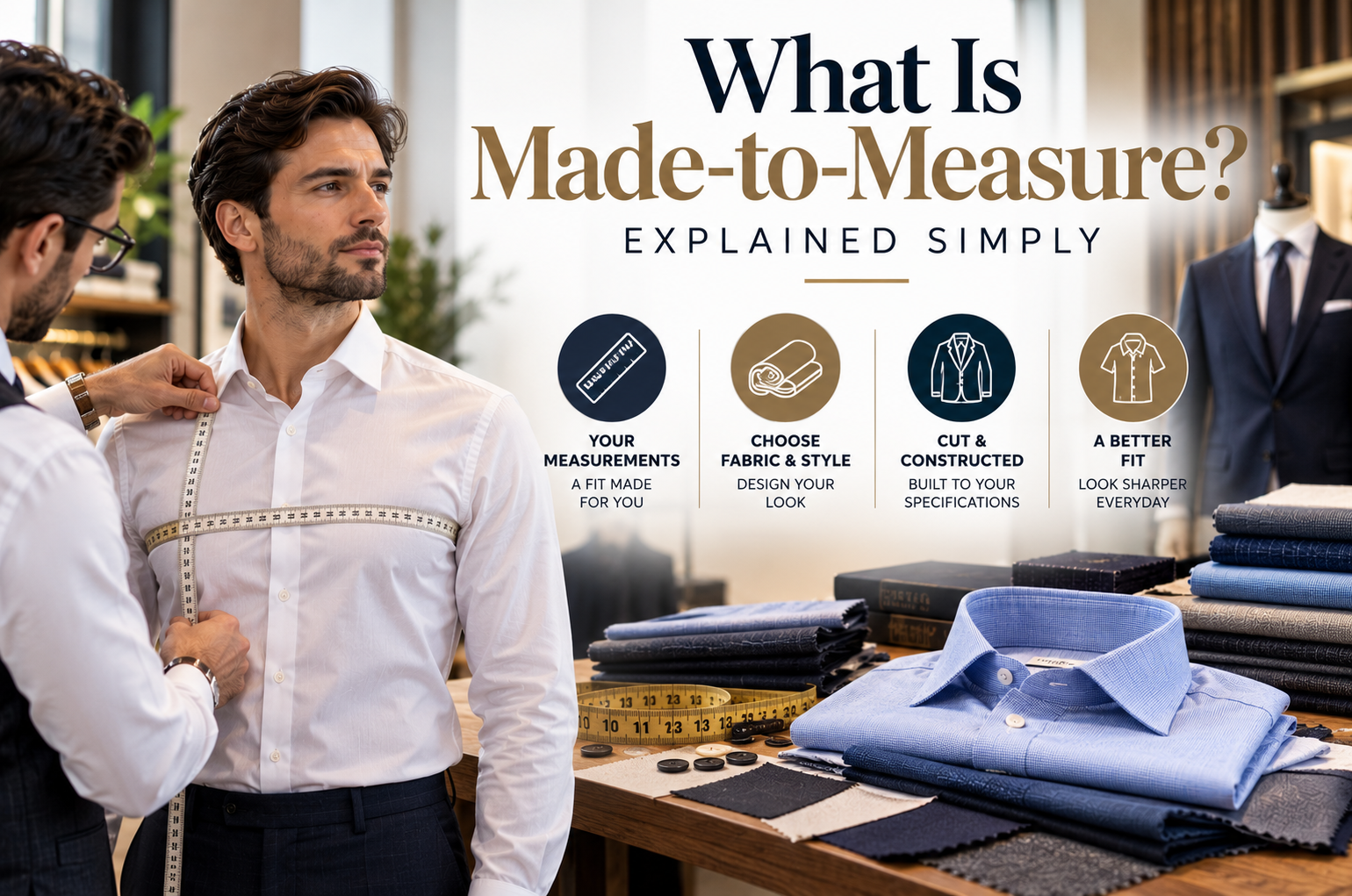
What Is Made-to-Measure? Explained Simply
If you have spent any time shopping for suits or shirts online, you have probably seen the term thrown around without much explanation. So here is the short answer first: made-to-measure clothing is a garment cut and constructed using your own body measurements instead of a fixed standard size, so it fits closer to your actual shape without the price or wait time of fully custom bespoke tailoring. Everything below breaks that down properly, question by question.
What Does “Made-to-Measure” Actually Mean?
Made-to-measure sits in the middle of the clothing world, between two more familiar options. On one side is off-the-rack clothing, made in bulk in fixed sizes like small, medium, or 42R. On the other side is traditional bespoke tailoring, where a garment is built entirely from scratch around an individual pattern.
Made-to-measure clothing Canada shoppers are increasingly choosing works by taking an existing, well-tested pattern and adjusting it using your submitted measurements, such as chest, waist, shoulder width, and sleeve length. The result is a garment built specifically for your body, without needing the in-person fittings or extended timeline that traditional bespoke requires.
How Is Made-to-Measure Different From Bespoke Tailoring?
This is probably the most common point of confusion, so it is worth being precise about it.
Bespoke tailoring starts from nothing. A tailor builds an entirely new pattern just for you, usually across multiple in-person fittings, adjusting the garment by hand each time until it fits exactly right. It is the most personalized approach possible, and it comes with a correspondingly higher price and a longer timeline, often weeks between fittings.
Made-to-measure starts from an existing pattern that has already been tested and refined, then adjusts that pattern to match your specific measurements. You still get a garment built around your body rather than a generic size, but without the extended back-and-forth of multiple fittings. For most people, made-to-measure delivers the vast majority of the fit benefit that bespoke offers, at a more accessible price and without needing to visit a tailor in person at all.
How Is Made-to-Measure Different From Off-the-Rack?
Off-the-rack, also called ready-to-wear, is built around standard sizing charts designed to fit an average body shape. The appeal is speed: you can try it on and walk out wearing it the same day. The trade-off is that very few people match every measurement on a standard size chart at once, which is why an off-the-rack jacket that fits your shoulders might still need the waist taken in, or a shirt in your usual size might be tight across the chest but loose at the cuffs.
Made-to-measure removes that compromise by using your actual measurements from the start, rather than the closest available size. Instead of buying a garment and then paying a local tailor to alter it afterward, the fit work happens before the garment is even made.
How Does the Made-to-Measure Process Actually Work?
The process is simpler than most people expect, and it generally follows the same basic steps regardless of which brand you order from:
- Choose the garment and fabric. You start by picking what you are building, whether that is a shirt, a suit, or a vest, along with the fabric and colour you want.
- Select your style details. Collar type, cuff style, lapel shape, button count, and similar choices are made at this stage, well before the garment is cut.
- Submit your measurements. Using a guided measurement process, you provide your own numbers such as chest, waist, shoulder width, and sleeve length. A good guide walks you through exactly how to take each one accurately.
- The garment is cut and constructed. Once your measurements and design choices are confirmed, the garment is cut specifically to your specifications rather than pulled from existing stock.
- You receive and wear it. The finished piece arrives built around your body, with any fit adjustments handled through the brand’s support or alterations policy if something is slightly off.
What Can You Actually Customize?
This varies by brand, but made-to-measure generally gives you control over far more than fit alone:
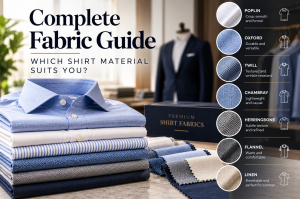
- Fabric weight, weave, and colour
- Collar, cuff, and button style on shirts
- Lapel style, vent, and lining on suits and jackets
- Fit preference, whether slim, regular, or relaxed through the chest and waist
- Personal touches like monogramming, depending on the brand
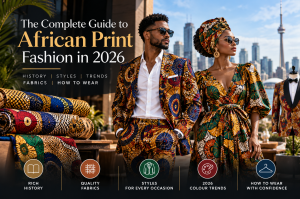
This is also where made-to-measure opens the door to pieces that simply are not available off-the-rack, such as custom Ankara and African print clothing built to your own measurements and fabric choices rather than whatever a retailer happened to stock that season.
Is Made-to-Measure Only for Suits?
Not at all, even though suits are usually the first thing people associate with the term. Made-to-measure applies just as well to dress shirts, vests, and women’s formal wear, including tailored suits built specifically for women rather than resized from a men’s pattern. Any garment where fit meaningfully affects how it looks and feels is a reasonable candidate for made-to-measure, not suits alone.
How Much Does Made-to-Measure Cost Compared to Off-the-Rack?
Here is an honest answer rather than a sales pitch: entry-level off-the-rack clothing will almost always have a lower sticker price upfront, simply because mass production is cheaper per unit than individually cutting each garment.
The comparison changes once you account for the full picture. An off-the-rack suit that needs alterations to fit properly is not actually priced at just its sticker price, since the alteration cost gets added on separately, and the shirt that never quite fits right often ends up barely worn. Made-to-measure pricing typically builds the fit work into the upfront cost, so there is no separate alterations bill afterward, and the piece tends to get worn regularly instead of sitting unused. Whether that trade-off is worth it depends on how often you will wear the piece and how much you personally value fit.
How Long Does Made-to-Measure Take?
Because the garment is cut after you order rather than pulled from existing stock, made-to-measure takes longer than walking out of a store with something off the rack. Exact timelines vary by brand, order volume, and season, so it is always worth checking current production times directly before ordering, particularly if you are working toward a specific date like a wedding.
Is Made-to-Measure Clothing Worth It?
It depends on what you are buying it for. For everyday basics you are not especially particular about, off-the-rack is often perfectly reasonable. For the pieces that matter most, a suit worn in wedding photos, dress shirts you reach for every week at work, or formal wear for an important event, made-to-measure tends to earn its keep by fitting properly from day one rather than needing separate alterations, and by simply getting worn more because it feels better on.
Made-to-Measure vs Buying Off-the-Rack and Getting It Altered
A lot of people assume these two paths end up in roughly the same place, since both involve a tailor-adjusted fit eventually. In practice they are different processes with different results.
When you buy off-the-rack and then get it altered, you are starting from a garment built for an average body and asking a tailor to correct the parts that do not match yours. Alterations can fix some issues well, such as hemming trouser length or taking in a waist, but they cannot fully correct a structural mismatch like narrow shoulders built for a wider frame, since the shoulder seam and sleeve are already fixed in place.
Made-to-measure skips that limitation entirely by starting from your measurements rather than correcting toward them afterward. The shoulder seam, chest, and sleeve are all built to your numbers from the first cut, which is why made-to-measure pieces tend to need little to no alteration once they arrive, compared with an off-the-rack piece that often needs several separate fixes.
Signs It Might Be Time to Try Made-to-Measure
A few common situations tend to push people toward trying made-to-measure for the first time:
- You consistently need alterations on off-the-rack shirts or suits, no matter which size you buy.
- You have a specific event coming up, such as a wedding, where the outfit will be photographed and worn repeatedly afterward.
- You want a fabric, colour, or style detail that standard retailers simply do not carry.
- You have struggled to find your size in stores at all, whether that is a fit issue through the shoulders, an unusual height, or a build that falls between standard size charts.
- You are tired of owning clothing that technically fits but never quite feels right to wear.
If more than one of these sounds familiar, made-to-measure is generally worth trying for at least one piece before deciding whether to build out a full wardrobe around it.
Common Myths About Made-to-Measure
“Made-to-measure is only for the wealthy.” That reputation comes from traditional bespoke tailoring. Online made-to-measure has narrowed the price gap considerably by removing the cost of in-person fittings and specialist overhead.
“I do not know my measurements, so I cannot order it.” A proper guided measurement process walks you through exactly what to measure and how, step by step, with no tailoring background required. Our own guide to measuring yourself for a custom shirt is a good example of what that process actually looks like.
“If it does not fit, I am stuck with it.” Reputable made-to-measure brands build a returns or adjustment policy into the process precisely because measurement mistakes happen occasionally. It is worth checking that policy before you order from anyone.
“Made-to-measure and bespoke are the same thing.” As covered above, they are related but distinct. Bespoke is built from an individual pattern across multiple fittings; made-to-measure adapts a proven pattern to your measurements in a single step.
Quick FAQ
Do I need to visit a store to order made-to-measure clothing?
No. Online made-to-measure services let you complete the entire process, from fabric selection to measurements, from home, with the finished piece shipped to you.
What happens if my measurements change over time?
Weight changes, fitness routines, and simply time passing can all shift your measurements. It is worth re-measuring before placing a new order rather than reusing old numbers, especially if it has been close to a year since you last measured.
Can made-to-measure clothing be altered further after it arrives?
In most cases yes, in the same way any garment can be taken to a tailor for minor adjustments, though a well-measured made-to-measure piece should need far less of this than an off-the-rack equivalent.
Is made-to-measure the same across every clothing brand?
No. The term describes the general approach, pattern adjusted to your measurements, but the specific process, fabric options, and quality vary meaningfully between brands, so it is worth comparing a few before ordering your first piece.
Should I start with one made-to-measure piece or order several at once?
Starting with a single piece, such as one dress shirt or one suit, is generally the smarter approach for a first order. It lets you judge the fit, the fabric, and the overall experience before committing to a larger order, and most people find it easier to trust their measurements the second time around once they have seen how the first piece turned out.
Final Thoughts
Made-to-measure clothing occupies a genuinely useful middle ground: closer to a custom fit than anything off a standard rack, without the cost and extended timeline of traditional bespoke tailoring. If you have been putting off trying it because the terminology felt confusing, hopefully this clears up exactly what you are choosing between.
Ready to see the difference for yourself? You can start by building your own piece or browsing the full range of custom clothing to get a feel for what made-to-measure actually looks like in practice.