Most men do not struggle with taste. They struggle with translation, turning a general sense of what looks good into the right outfit for a specific Tuesday morning meeting, a Saturday wedding, or a Friday dinner they were only told about an hour ago. A proper men style guide should solve exactly that problem: fewer guesses, less time standing in front of the closet, and outfits that actually match the occasion.
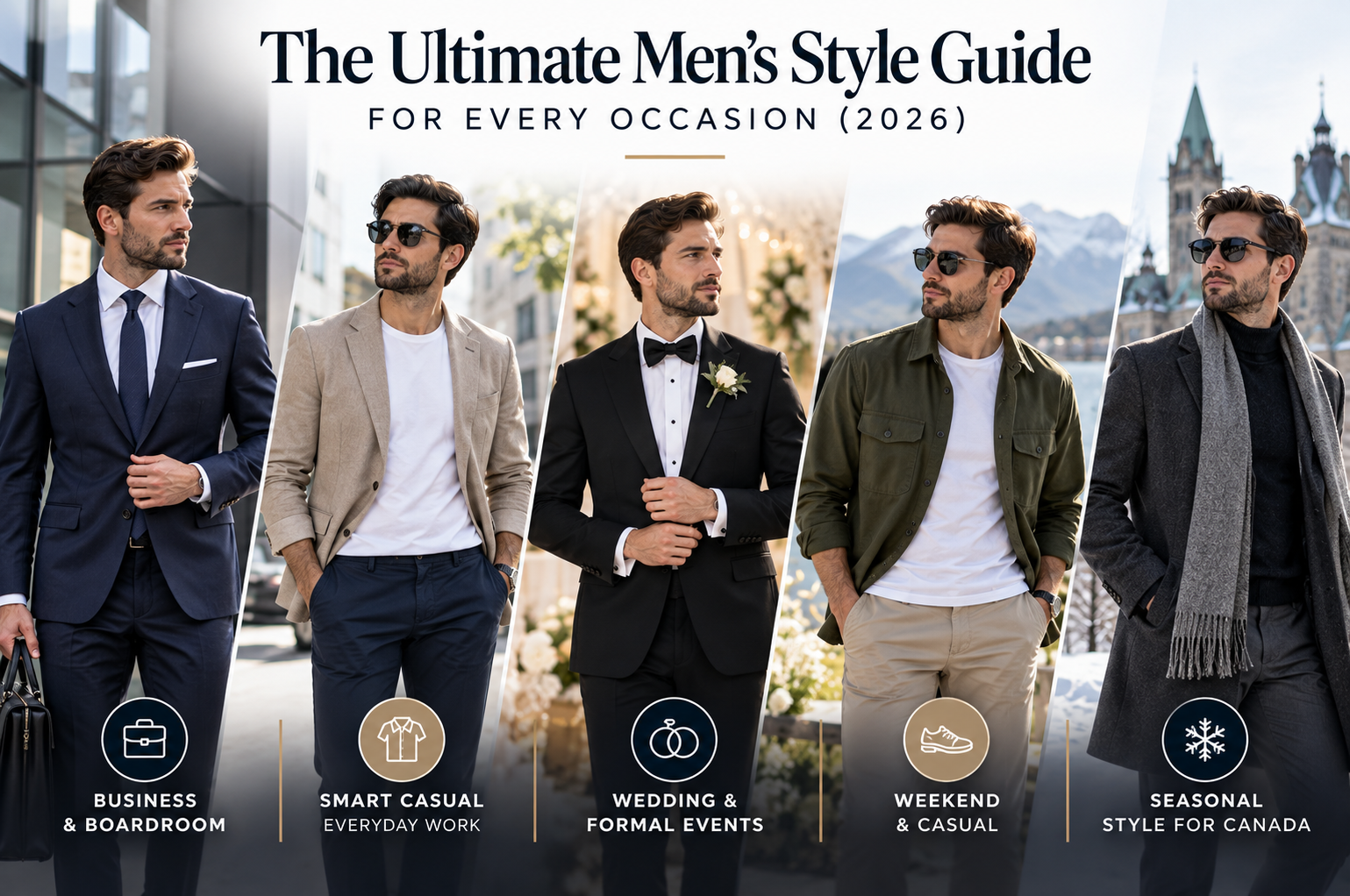
This men’s style guide Canada 2026 walks through what to wear for every major occasion you’ll actually face this year, from the boardroom to a backyard wedding, with practical, Canada-specific advice on fabric, layering, and fit along the way.
Start With a Wardrobe Foundation, Not a Trend
Before getting into specific occasions, it helps to have a small set of foundation pieces that work across most of them. A strong men’s wardrobe foundation typically includes:
- Two to three well-fitting dress shirts in versatile colours: white, light blue, and a subtle pattern.
- One tailored suit in navy or charcoal, which covers weddings, interviews, and formal work events.
- A blazer that can be dressed up with trousers or down with dark jeans.
- Quality chinos in a neutral tone like khaki or grey.
- A few plain or subtly patterned casual shirts for smart casual settings.
- One good pair of leather shoes in brown or black, plus a clean pair of casual sneakers.
Once these basics are in place, everything below becomes a matter of combining and adjusting them rather than buying an entirely new outfit for every event.
Business and Boardroom Style
For client meetings, interviews, and formal office environments, the safest and sharpest choice remains a well-fitted suit paired with a crisp dress shirt. Fit matters more here than almost anywhere else: a suit that is too boxy or too tight undercuts even expensive fabric.
A properly tailored suit follows your shoulder line without pulling, sits close through the waist without gripping, and leaves the sleeve ending right at the wrist bone. This is precisely where custom clothing Canada brands have an edge over standard retail sizing, since a made-to-measure suit is built to your own proportions rather than the closest available size on a rack.
- Stick to solid or subtly patterned shirts for the boardroom; save bold prints for casual settings.
- A simple silk tie in navy, burgundy, or grey works with almost any suit colour.
- Keep accessories minimal: a leather belt matching your shoes, and a simple watch.
Smart Casual for Everyday Work
Many Canadian workplaces have shifted toward a smart casual dress code, sitting between a full suit and jeans and a t-shirt. The formula that works consistently is one structured piece paired with one relaxed piece.
- A blazer over a plain t-shirt or polo, with chinos or dark jeans.
- A dress shirt, sleeves rolled, worn untucked with well-fitted chinos.
- A quality knit sweater layered over a collared shirt for cooler months.
Smart casual fails most often when every piece is either too formal or too relaxed at once. Balance is the whole trick: if your top half is structured, let the bottom half relax, and vice versa.
Wedding and Formal Event Dressing
Weddings are usually where men feel the most pressure to get it right, and for good reason: the outfit is documented in photos for years. The details worth getting right, in order of importance, are fit, fabric, and colour coordination with the event itself.
- Always check the invitation for a stated dress code before choosing an outfit.
- For a daytime or outdoor summer wedding, lighter fabrics and colours like tan, light grey, or soft blue tend to work well; see our guide on seasonal suit fabrics for how to choose material by climate and season.
- Evening and winter formal events call for darker tones: navy, charcoal, or black.
- If you are part of the wedding party, coordinate fabric and colour with the group rather than choosing independently.
For grooms and groomsmen especially, a custom suit or vest ordered well in advance removes the risk of a rented or off-the-rack fit compromise on a day with zero room for do-overs. You can explore options through our vest builder or the full Men’s Root Collection.
Weekend and Casual Style
Weekend dressing is where most men default to whatever is comfortable, which is fine, but a small amount of intention still makes a visible difference. A few reliable weekend formulas:
- A plain crewneck sweater or overshirt with dark jeans and clean sneakers.
- A short-sleeve shirt in a subtle pattern, worn open over a plain t-shirt, with chinos.
- A well-fitted bomber or field jacket over a simple base layer for cooler weekends.
The common thread across all of these is fit. A plain t-shirt and jeans look noticeably better when both are the right size for your body rather than generically oversized or undersized.
Dressing for the Canadian Climate
A men’s style guide for Canada has to account for genuinely cold winters and humid summers, since the same outfit rarely works across both. A few practical layering principles carry you through the year:
- Winter: a wool overcoat over a suit or blazer keeps formal outfits intact without sacrificing warmth; wool and heavier cotton blends hold structure better than lighter summer fabrics.
- Spring and fall: a mid-weight blazer or field jacket, worn over a sweater or shirt, handles the unpredictable temperature swings common in most Canadian cities.
- Summer: lighter cotton and linen blends breathe better in humidity, particularly for dress shirts and suit jackets worn for outdoor events.
If you regularly attend formal events across different seasons, it is worth owning at least one lighter-weight and one heavier-weight suit rather than trying to force a single suit through every Canadian season.
Custom vs Off the Rack: Which Fits Your Style Goals?
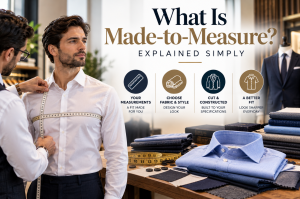
Off-the-rack clothing works well for casual basics you will alter minimally, but for the pieces central to a strong personal style, dress shirts, suits, and formal wear, made-to-measure clothing tends to deliver a noticeably sharper result. A men style guide is only as useful as the fit of the clothes following it, and fit is precisely where custom clothing has the advantage.
If you are ready to build a signature piece rather than another off-the-rack compromise, our combo shirt builder and full shop are a good place to start.
Footwear and Finishing Touches
Footwear quietly does more work than most men give it credit for, since it is often the first thing people notice after the overall silhouette. A few reliable rules keep footwear from undoing an otherwise good outfit:
- Match the formality of your shoes to the formality of your outfit: dress shoes with suits, clean minimal sneakers or loafers with smart casual, and casual sneakers or boots with weekend wear.
- Keep leather shoes polished and free of visible scuffs; a scuffed shoe reads as neglect even under a sharp suit.
- Coordinate belt and shoe colour whenever both are visible in the same outfit.
- Socks should generally match your trousers, not your shoes, especially in formal settings, so the leg line reads as continuous when seated.
Beyond footwear, small finishing touches, a well-fitted watch, a simple pocket square for formal events, or a clean haircut, tend to add more visible polish per dollar spent than another piece of clothing would.
Common Style Mistakes to Avoid
- Ignoring fit in favour of brand or price. An expensive shirt that fits poorly will always look worse than an affordable one that fits correctly.
- Over-layering for the occasion. Save maximum layering for genuinely cold days; a blazer, sweater, and scarf together in mild weather reads as excessive rather than stylish.
- Mismatched formality between top and bottom. A dress shirt with athletic shorts, or a hoodie with a tailored suit trouser, breaks the outfit’s logic even if each piece is nice on its own.
- Skipping alterations or measurements entirely. Whether the piece is off-the-rack or custom, an unaltered or inaccurately measured garment undercuts everything else about the outfit.
Frequently Asked Questions
How many suits does a man actually need?
Most men are well covered with two: one navy or charcoal suit for general formal use, and a second in a lighter or seasonal fabric for warmer events. Beyond that, additional suits are about variety rather than necessity.
What should I wear if the dress code is unclear?
When in doubt, it is safer to be slightly overdressed than underdressed. A blazer with trousers or dark jeans is a flexible middle ground that works for most ambiguous invitations.
Is it worth investing in custom clothing if I am just starting to build my wardrobe?
Starting with one or two well-made custom pieces, such as a dress shirt or a single suit, is often more useful than several off-the-rack items that each need separate alterations. It gives you one reliable, correctly fitted anchor to build the rest of the wardrobe around.
How do I dress for a Canadian winter wedding without looking bulky?
Choose a slim but properly tailored wool suit, then add a well-fitted overcoat rather than a bulky casual jacket. The overcoat should be removed indoors, so the suit underneath still needs to look complete on its own.
What is the easiest way to look more put together without buying a lot of new clothes?
Get your existing pieces properly fitted or altered first. A correctly fitted shirt or blazer you already own will usually improve your look more than a new item bought in the wrong size.
How often should I actually update my wardrobe?
Foundation pieces like a well-made suit or a classic dress shirt can reasonably last several years with proper care. Trend-driven items are the ones worth reviewing each season, while the core wardrobe should be judged on fit and fabric condition rather than how new it looks.
Building a Signature Look Over Time
Style that looks effortless is rarely built in a single shopping trip. It usually comes from slowly narrowing down a personal set of colours, fits, and details that consistently work for your body and your life, then repeating that formula with small variations rather than reinventing it each season.
A practical way to start is to notice which outfit, from your own closet, gets the most compliments or simply feels the most natural to wear, and treat that as your baseline. From there, add one new piece at a time, whether a better-fitted blazer, a properly tailored dress shirt, or a well-made pair of trousers, and judge it against that baseline before adding the next. Over a year or two, this approach quietly builds a wardrobe that looks considered rather than random, without requiring constant new purchases.
最終的な感想
A good men style guide is not about following every trend each season; it is about knowing which small number of well-fitted pieces cover the occasions you actually face, and having them ready before the invitation or the meeting arrives. Build the foundation, adjust it by season and event, and let fit do most of the work.
Ready to build a wardrobe piece that actually fits your style and your body? Explore Kavoo’s custom clothing collections to get started.