5 Best Suit Fabrics for Winter in Canada
A suit built for a mild autumn day quickly becomes a problem once a real Canadian winter sets in. Thin wool gaps feel the wind on the walk between the parking lot and the office door, and a suit that looked sharp in October can feel genuinely inadequate by January. Choosing the right winter suit fabric Canada weather actually demands means thinking beyond colour and cut, down to the weight and weave of the cloth itself.
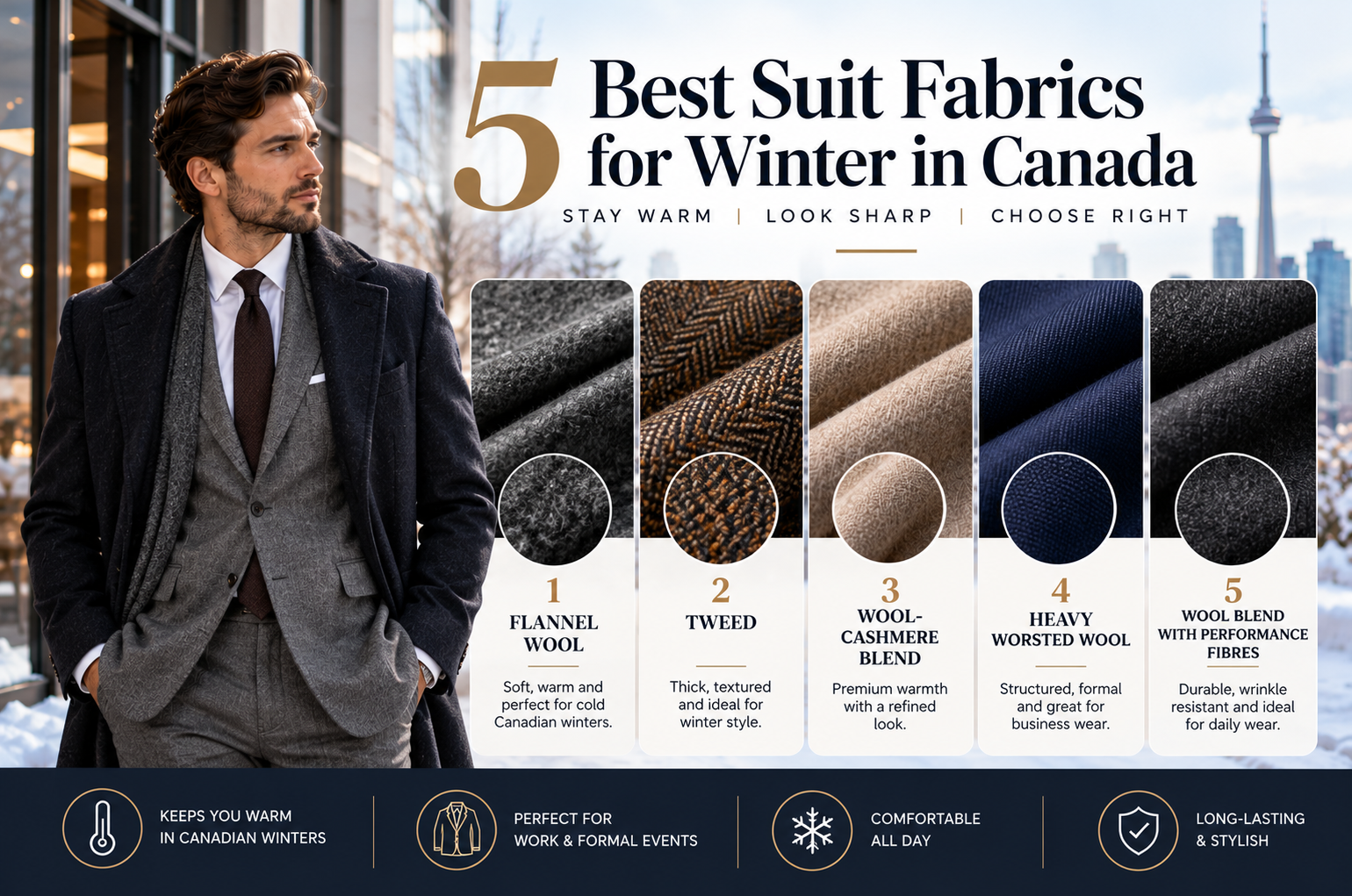
Here are the five fabrics that consistently perform best through a Canadian winter, what makes each one work, and where each one fits best.
1. Flannel Wool
Flannel is probably the single most recognizable winter suiting fabric, and for good reason. It is a woven wool fabric finished with a light brushing process that raises the surface fibres slightly, giving it a soft, slightly fuzzy texture and noticeably better insulation than a smooth-finish wool of the same weight.
Why it works for winter: the brushed finish traps a thin layer of air close to the fabric surface, which adds warmth without requiring an especially heavy cloth. It also has a soft, matte visual texture that reads as warm and seasonal rather than crisp and formal.
Best for: everyday office wear through the coldest months, and casual-to-smart winter events where a slightly softer, less sharp finish suits the occasion better than a crisp worsted wool.
Watch for: flannel can pill with heavy friction over time, particularly where a bag strap or coat repeatedly rubs against the shoulder, so it benefits from being paired with a well-fitted overcoat during the commute.
2. Tweed
Tweed is a thicker, more textured woven wool fabric, traditionally associated with country and outdoor wear but now a genuinely strong choice for structured winter suiting and sport coats.
Why it works for winter: tweed is typically woven at a heavier weight than standard suiting wool, and its denser weave structure provides real insulation, closer to a light outerwear fabric than a typical dress suit cloth.
Best for: smart casual winter outfits, creative or less conservative office environments, and weekend formal events where a bit more texture and personality suits the setting better than a plain, smooth suit.
Watch for: tweed’s heavier weight and strong texture read as noticeably more casual than flannel or worsted wool, so it is generally not the safest choice for a strict corporate boardroom setting.
3. Wool-Cashmere Blend
Blending a small percentage of cashmere into a wool suiting fabric, typically somewhere between 10 and 30 percent cashmere, adds noticeable softness and warmth without the fragility or cost of a pure cashmere garment.
Why it works for winter: cashmere fibres are naturally finer and provide better insulation per unit of weight than standard wool, so a wool-cashmere blend can deliver excellent warmth without becoming visually bulky or overly heavy to wear.
Best for: client meetings, formal winter events, and any occasion where the suit needs to feel genuinely premium as well as warm.
Watch for: cashmere blends typically cost more than pure wool equivalents and can be slightly more delicate, so proper care and occasional professional cleaning matter more here than with a standard wool suit.
4. Heavy Worsted Wool
Worsted wool is the standard suiting cloth most people picture when they think of a classic suit, woven from combed, tightly twisted wool fibres for a smooth, refined finish. For winter specifically, choosing a heavier worsted weight, generally in the range of eleven to thirteen ounces per yard rather than the lighter seven to nine ounce fabrics common in summer suiting, makes a real difference.
Why it works for winter: the tighter weave and heavier weight both contribute to better insulation than a lightweight worsted wool, while still keeping the smooth, structured, formal finish that a heavier flannel or tweed cannot fully match.
Best for: corporate and conservative business settings, interviews, and formal events where a crisp, polished finish is expected even through the coldest months.
Watch for: heavier worsted wool can feel noticeably warmer indoors than flannel or a lighter blend, so it suits genuinely cold outdoor conditions better than an overheated office environment worn without a layer underneath.
5. Wool Blend With Added Performance Fibres
Modern suiting increasingly blends wool with a small percentage of performance fibres such as nylon or elastane, improving stretch, wrinkle resistance, and durability while keeping most of wool’s natural insulating properties intact.
Why it works for winter: these blends hold up well to the repeated layering, bag straps, and general wear that a Canadian winter commute puts a suit through, while still providing solid warmth from the wool base fibre.
Best for: frequent commuters and travellers who need a suit that handles daily wear and occasional light wrinkling from a coat or bag without looking worn out by February.
Watch for: very high synthetic content can start to reduce breathability and the natural feel of the fabric, so a blend that keeps wool as the clear majority fibre generally performs better than one where synthetic content dominates.
How to Layer a Winter Suit Properly
Fabric choice is only part of staying warm and looking sharp through a Canadian winter. A few layering habits make a real difference regardless of which fabric you choose:
- Wear a well-fitted wool overcoat over the suit for the actual commute, rather than relying on the suit fabric alone to handle outdoor cold.
- Choose a slightly heavier dress shirt or add a fine merino wool base layer underneath on the coldest days, rather than compensating entirely through the suit jacket.
- Keep a scarf and gloves as part of the daily routine rather than an occasional extra, since exposed skin loses heat fastest regardless of how warm the suit itself is.
- Remove the overcoat promptly once indoors, since even a well-insulated winter suit fabric can feel too warm layered under a full coat in a heated office.
Choosing Between These Five Fabrics
If you only need one winter suit and want maximum everyday versatility, flannel wool or a heavier worsted wool are generally the safest picks, since both suit a wide range of occasions from the office to more formal winter events. If your workplace leans more conservative, lean toward worsted wool for its crisper, more traditional finish. If you want something with more personality for less formal settings, tweed is worth considering, particularly as a sport coat rather than a full matching suit. For anyone wanting the most luxurious option and willing to pay a bit more, a wool-cashmere blend delivers genuinely superior warmth and feel. For a suit that needs to survive heavy daily wear and frequent travel, a wool blend with performance fibres tends to hold up best over time.
Colours That Work Well With Winter Suiting
Winter fabrics tend to suit a slightly different colour palette than lighter summer suiting, partly because heavier wool naturally holds richer, deeper tones well.
- Charcoal and dark grey remain the most versatile winter suit colours, working equally well for office and formal evening settings.
- Deep navy holds up through winter just as well as any other season and pairs naturally with flannel or heavy worsted wool.
- Brown and deep olive tones suit tweed particularly well, leaning into the fabric’s more textured, country-influenced character.
- Black is best reserved for genuinely formal winter events rather than everyday office wear, where charcoal or navy generally reads as more versatile.
Common Winter Suit Fabric Mistakes
- Choosing weight based on colour or pattern alone. A fabric swatch can look appropriately wintery in colour while still being a lightweight summer weave underneath; always check the actual weight rather than judging by appearance alone.
- Skipping a proper overcoat. Even the warmest suiting fabric is not designed to function as outerwear, and relying on the suit jacket alone during an outdoor Canadian winter commute leaves you cold regardless of fabric choice.
- Over-layering indoors. A heavy winter fabric paired with a thick sweater underneath can quickly become uncomfortably warm in a heated office; save the heaviest base layers for outdoor-heavy days specifically.
- Ignoring fabric care differences. Flannel, tweed, and cashmere blends each have slightly different care needs, and treating all winter fabrics identically at the dry cleaner can shorten the lifespan of a more delicate blend.
Why Custom Tailoring Matters Even More for Winter Suits
Heavier winter fabrics behave differently on the body than lightweight summer cloth, and an ill-fitting winter suit is often more noticeable than an ill-fitting lightweight one, since the extra bulk of a heavier fabric exaggerates any looseness or tightness in the cut. A properly tailored winter suit, built to your own measurements, accounts for the additional weight and structure of the fabric from the first cut, rather than forcing a standard pattern designed around lighter cloth to work with a heavier one.
You can build your own winter suit and choose from available fabric weights directly through our suit builder, selecting the fabric and finish that matches the occasions you actually need it for.
Frequently Asked Questions
Is flannel or worsted wool better for a Canadian winter?
Both work well, and the choice usually comes down to formality. Flannel suits everyday office wear and casual winter events with its softer, warmer finish, while heavier worsted wool suits more conservative, formal settings where a crisp finish matters.
Can I wear a summer-weight suit through a Canadian winter with just a warmer coat?
It is possible for brief periods, but a lightweight suit fabric paired with a heavy overcoat still leaves you cold the moment the coat comes off indoors, and the suit itself will not provide meaningful insulation on its own. A genuinely winter-weight fabric performs better for anyone spending a full day in a suit through the colder months.
Does a heavier winter suit fabric always mean a bulkier look?
Not if it is properly tailored. A well-cut suit in a heavier winter fabric should still follow your body’s natural lines; the extra weight comes from the cloth itself rather than added bulk in the cut, provided the measurements and construction are done correctly.
Is tweed too casual for a work suit?
It depends on the workplace. Tweed suits smart casual and creative environments well, but it generally reads as more casual than flannel or worsted wool, so it is a safer choice as a sport coat or for less conservative offices than as a full matching suit in a strict corporate setting.
How do I know what fabric weight I am actually ordering?
Fabric weight is typically listed in ounces per yard or grams per square metre in the product or fabric description. If you are unsure, a heavier number within the eleven to thirteen ounce range is generally a safe target for genuine Canadian winter use.
Can one suit realistically handle both a cold office and outdoor winter events?
A heavier worsted wool or flannel suit, paired with a proper overcoat for outdoor portions of the day, can reasonably cover both situations. For anyone splitting time fairly evenly between indoor formal settings and genuinely cold outdoor events, owning one fabric from the warmer end of this list and one lighter option for milder days is a more comfortable long-term approach than relying on a single suit year-round.
最終的な感想
Choosing the right winter suit fabric Canada weather calls for comes down to balancing warmth, formality, and how the suit actually fits your daily routine, whether that means a conservative office, frequent travel, or more relaxed winter events. Flannel, tweed, a wool-cashmere blend, heavy worsted wool, and a performance wool blend each solve a slightly different version of the same problem, so matching the fabric to your actual winter rather than picking the first option on the list makes the real difference.
Ready to build a suit that actually holds up through a Canadian winter? Explore Kavoo’s custom clothing collections to get started.