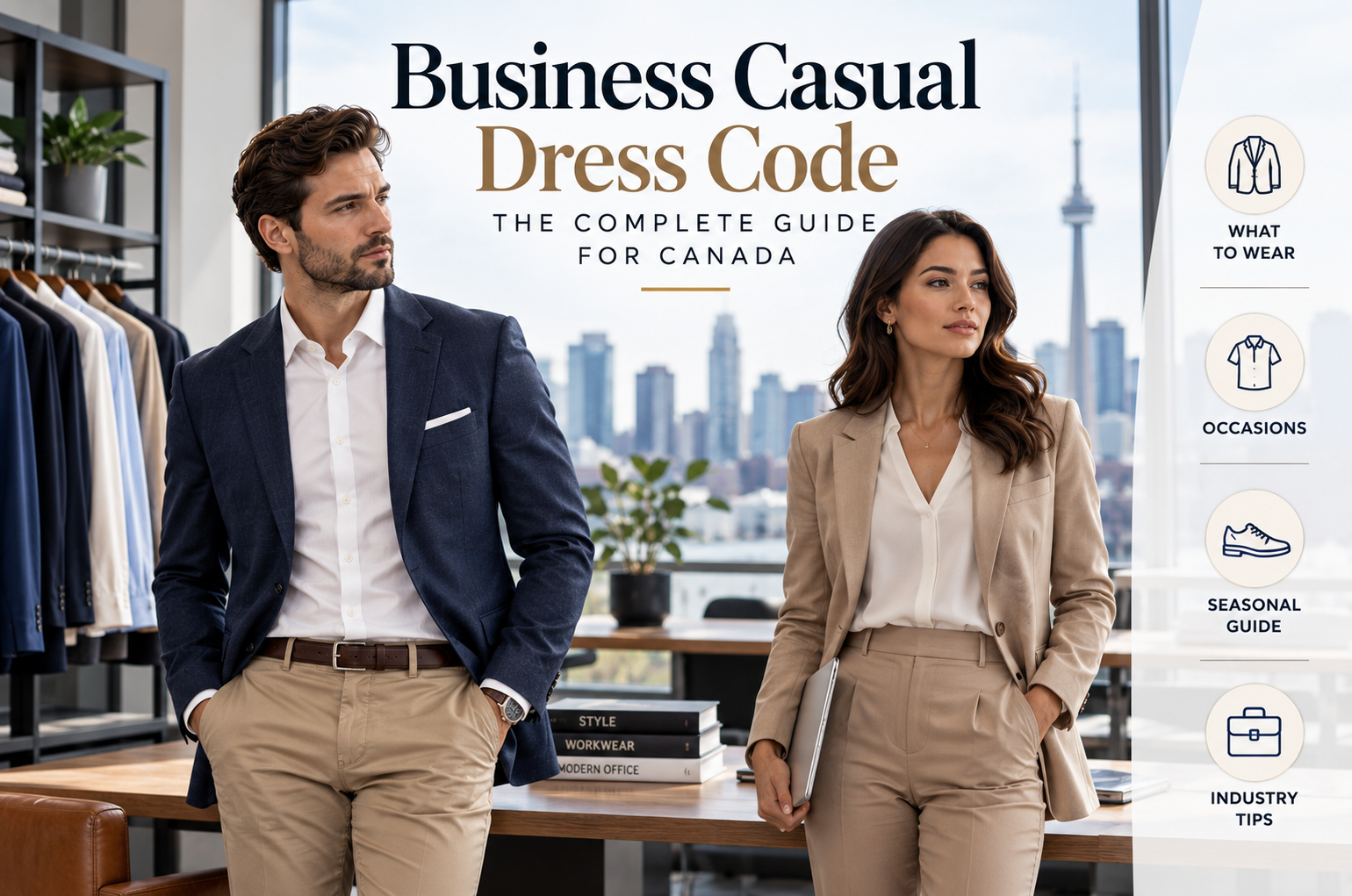
Few dress codes cause as much confusion as business casual. It sits between a full suit and a t-shirt and jeans, but the exact boundary shifts from one Canadian workplace to the next, which leaves plenty of people either overdressed on a casual Friday or underdressed for a client meeting they did not realize was more formal than usual.
This business casual Canada guide sets out exactly what the dress code means, how it differs from smart casual and business formal, what to actually wear, and how to adjust the formula by industry and season, so getting dressed for work stops being a guessing game.
What Business Casual Actually Means
Business casual is a professional dress code that drops the requirement for a full suit and tie while keeping the overall look polished, tailored, and workplace appropriate. It is not an invitation to wear whatever is comfortable; it is a more relaxed version of formal business attire, not the absence of a dress code.
In practice, business casual usually means tailored trousers or chinos, a collared shirt or blouse, and often a blazer, worn without the strict formality of a matching suit and tie combination.
Business Casual vs Smart Casual vs Business Formal
These three terms get used interchangeably, but each sits at a different point on the formality scale:
- Business formal: a matching suit, dress shirt, tie, and formal leather shoes. Standard for client-facing meetings, interviews at conservative firms, and formal business events.
- Business casual: tailored separates, such as a blazer with chinos or a blouse with tailored trousers, without a matching suit or a tie. Common as the everyday standard in many Canadian offices.
- Smart casual: a step more relaxed again, allowing dark jeans, polos, and cleaner sneakers alongside blazers, typically reserved for casual Fridays or less formal workplace cultures.
The confusion usually happens because individual offices blend these categories differently. Reading your specific workplace culture, rather than applying a single fixed rule everywhere, is the real skill behind dressing business casual well.
Building a Men’s Business Casual Wardrobe
A reliable men’s business casual outfit is built from a small, repeatable set of pieces:
- A tailored blazer in navy, charcoal, or grey, worn over a collared shirt.
- Dress shirts or fine Oxford shirts in solid colours or subtle patterns, worn with or without a tie depending on the day.
- Chinos or tailored dress trousers in neutral tones like khaki, grey, or navy.
- Leather loafers or clean derby shoes, kept polished.
- A simple leather belt matching your shoe colour.
The formula that works consistently: one structured piece, such as a blazer, paired with one slightly relaxed piece, such as chinos instead of suit trousers. Fit is what separates business casual that looks intentional from business casual that looks like someone simply skipped the suit; a properly tailored blazer or custom clothing Canada shirt makes that difference immediately visible.
Building a Women’s Business Casual Wardrobe
Women’s business casual follows the same underlying principle: tailored, polished, and professional without the strict formality of a full formal suit.
- Tailored trousers or a knee-length pencil skirt in neutral tones.
- Blouses in solid colours or subtle patterns, or a fitted blazer worn over a simple top.
- Closed-toe flats, low heels, or block heels rather than casual sandals.
- A structured dress in a solid colour, worn with a blazer, as a simple one-piece alternative to separates.
For interviews, client meetings, or formal workplace events that call for something sharper, a tailored formal option is worth having ready; you can explore custom options through our 레이디 수트 빌더.
What to Avoid in a Business Casual Setting
- Graphic t-shirts, athletic wear, and visibly worn or distressed denim.
- Flip-flops, athletic sneakers, or sandals in most professional office settings.
- Overly casual hoodies or sweatshirts as a primary layer in client-facing roles.
- Wrinkled or visibly ill-fitting clothing; business casual still assumes a tailored, put-together look, not simply the absence of a tie.
Business Casual by Industry: Reading the Room
The exact boundary of business casual shifts noticeably by industry, and it is worth calibrating your wardrobe to your specific workplace rather than a generic national standard.
- Finance, law, and consulting: business casual here often sits closer to business formal, with tailored blazers, dress shirts, and minimal colour experimentation the safer default.
- Corporate and government offices: a fairly traditional interpretation of business casual, with blazers, collared shirts, and tailored trousers as the everyday standard.
- Technology and creative industries: business casual tends to run more relaxed, often allowing quality knitwear, dark jeans, and clean sneakers alongside blazers.
- Client-facing sales and hospitality roles: generally lean formal within business casual, since appearance is directly tied to first impressions with external clients.
When starting a new role or unsure of the norm, it is worth observing what colleagues one level above you typically wear during your first week, and dressing slightly more formal than the room until the actual standard becomes clear.
Dressing Business Casual Through the Canadian Seasons
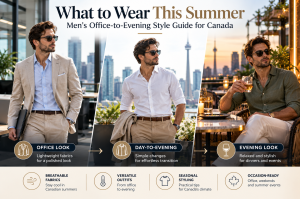
Canadian offices have to handle both genuinely cold winters and humid summers, which affects how business casual translates season to season.
- Winter: layer a wool blazer over a sweater and collared shirt, and keep an overcoat for the commute rather than wearing it at your desk.
- Spring and fall: a mid-weight blazer over a shirt handles the unpredictable swings typical of most Canadian cities without overheating indoors.
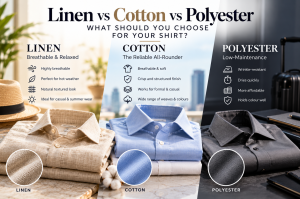
- Summer: lighter cotton or linen-blend shirts and breathable trousers keep business casual comfortable without sacrificing polish, particularly for offices without strong air conditioning.
For a deeper breakdown of matching fabric weight to climate across the full year, see our guide on seasonal suit fabrics.
Five Business Casual Outfit Formulas
- Navy blazer, white dress shirt, grey chinos, brown leather loafers.
- Charcoal blazer, light blue Oxford shirt, tailored navy trousers, black derby shoes.
- Fitted blazer, solid blouse, tailored black trousers, block heels or flats.
- Quality knit sweater over a collared shirt, dark chinos, clean leather sneakers, for more relaxed offices.
- Structured solid-colour dress with a blazer layered on top, paired with simple flats or low heels.
Common Business Casual Mistakes
- Treating business casual as casual first, business second. The professional half of the phrase still matters more than the casual half.
- Wearing an unaltered blazer or trousers. Off-the-rack separates almost always need at least minor alterations to look genuinely tailored rather than borrowed.
- Ignoring industry norms. A perfectly reasonable business casual outfit for a creative agency can read as underdressed at a conservative law firm, and vice versa.
- Skipping shoe care. Scuffed or worn shoes undercut an otherwise sharp outfit faster than almost any other detail.
Accessories That Complete a Business Casual Look
Accessories in a business casual setting should support the outfit quietly rather than draw attention away from it. A few details consistently make the difference between a look that feels finished and one that feels slightly unfinished:
- A simple leather watch rather than an oversized or overly casual sport watch.
- A structured bag or briefcase, kept in good condition, rather than a casual backpack, for client-facing days.
- Minimal jewellery: a wedding band, a simple chain, or small studs read as professional; anything louder tends to compete with the outfit.
- A pocket square or subtle tie in a solid colour, reserved for the more formal end of business casual, such as an important client meeting.
The general rule is that accessories should be noticed after the outfit, not instead of it. If an accessory is the first thing someone comments on, it is usually doing too much for a business casual setting.
Why Fit Matters Even More in Business Casual
A full suit has structure built in; business casual, built from separates rather than a matching set, relies far more heavily on individual fit to look intentional. A blazer that gaps at the shoulders or trousers that pool at the ankle read as sloppy even when the pieces themselves are good quality.
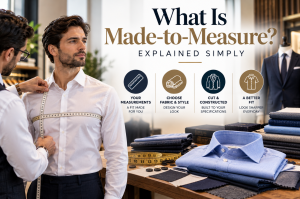
This is exactly where made-to-measure pieces earn their keep: a shirt or blazer built to your own measurements removes the guesswork of finding a standard size that happens to fit your shoulders, arms, and torso all at once. You can start building a properly fitted business casual foundation through our combo shirt builder, the Men’s Root Collection, or the 레이디 수트 빌더 for women’s tailored options.
Confirm current builder availability and whether a women’s blazer or trouser builder is live before publishing, so the linked pages match what customers can actually order today.
자주 묻는 질문
Is a tie required for business casual?
No. A defining feature of business casual is that a tie becomes optional rather than mandatory. Wearing one is not wrong, but it is not expected the way it is under a business formal dress code.
Can I wear jeans under a business casual dress code?
It depends heavily on the workplace. Dark, unworn, well-fitted jeans are acceptable in many relaxed offices, particularly in tech and creative industries, but remain a risk in more conservative environments like finance and law unless colleagues are already doing it.
What shoes count as business casual?
Leather loafers, derby shoes, and low block heels or flats are the safest choices. Athletic sneakers and sandals generally fall outside business casual, though clean minimal leather sneakers are increasingly accepted in more relaxed workplaces.
How is business casual different across genders?
The underlying principle, tailored and polished without the strict formality of a full suit, applies equally, though the specific pieces differ: blazers with chinos or trousers for men, and blazers with tailored trousers, skirts, or structured dresses for women.
What should I wear to a job interview if the role has a business casual culture?
Dress one level more formal than the daily standard for your first interview. A blazer with a dress shirt or blouse and tailored trousers is a safe choice even at companies where the everyday dress code is more relaxed.
Do I need a full suit for occasional formal days within a business casual role?
Yes, it is worth keeping one full suit or tailored formal option on hand even in a predominantly business casual workplace, for client presentations, interviews you conduct, or unexpected formal meetings that come up with little notice.
최종 생각
Getting business casual right in a Canadian workplace comes down to three things: understanding where your specific office actually sits on the formality scale, building a small set of well-fitted foundation pieces, and adjusting them sensibly by season. Once those three pieces are in place, dressing for work stops being a daily decision and becomes a simple formula you repeat with small variations.
Ready to build a properly fitted business casual wardrobe? Explore Kavoo’s custom clothing collections to get started.