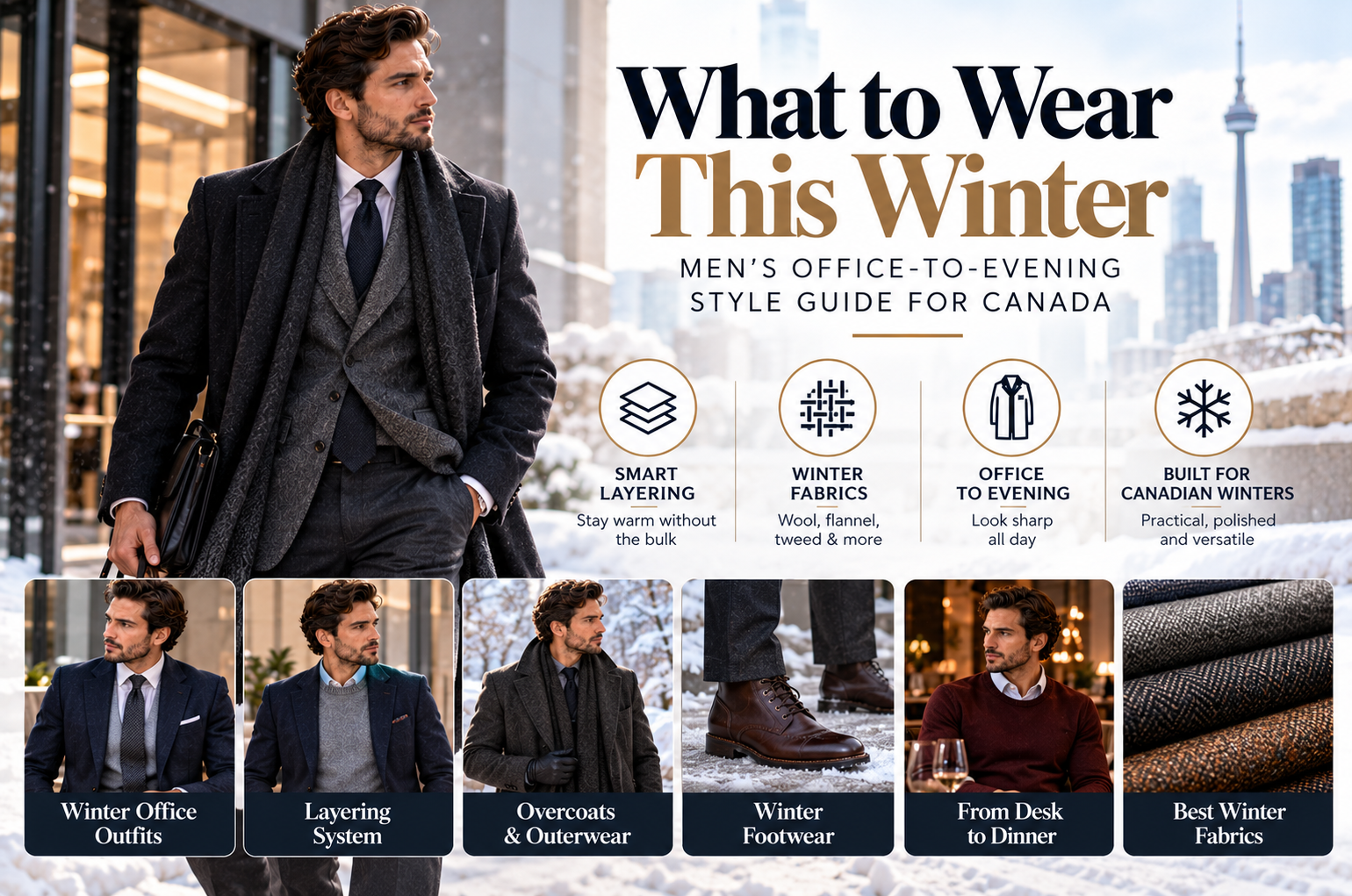
A Canadian winter day rarely stays in one temperature. You leave the house at minus twenty, spend the commute in a heated train or car, sit in an office that runs warm, and then step back into the cold for a dinner reservation. Your outfit has to handle all of that without turning into a bulky, shapeless pile of layers.
Getting the right winter outfits men Canada offices and evenings actually call for comes down to layering with intention, choosing fabrics that insulate without overheating, and making a few small swaps that take you from desk to dinner. This guide covers exactly that, so you stay warm outside and look sharp inside.
Why Canadian Winter Dressing Is Trickier Than It Looks
The core problem is the gap between outdoor and indoor temperatures. A heavy outfit that feels perfect on a snowy platform becomes uncomfortable within minutes in a heated office. A lighter outfit that suits the office leaves you shivering on the walk to the car.
The second problem is slush, salt, and snow. Shoes, trouser hems, and coats take a beating from November through March, so the outfit has to be practical as well as polished.
The solution is not one heavy garment. It is a system of lighter layers that you can add and remove as the setting changes.
Build Your Outfit as a Layering System
Think of a winter outfit as four layers, each doing a different job.
- Base layer: a thin merino wool or fine cotton undershirt that sits against the skin, manages moisture, and adds warmth without bulk.
- Shirt layer: your dress shirt, which should fit cleanly so it does not bunch when layered over and under other pieces.
- Mid layer: a vest, cardigan, fine knit sweater, or suit jacket that provides the main insulation indoors.
- Outer layer: a proper overcoat or winter coat that handles the outdoor cold and comes off as soon as you walk inside.
When each layer is thin and fits well, the total warmth is far better than a single thick garment, and you can remove one layer at a time rather than being stuck in an outfit that is either too hot or too cold.
Start With the Right Winter Fabrics
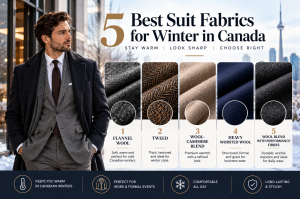
Fabric does more work in winter than any other season. Wool in its various forms is the foundation of a good cold-weather wardrobe, since it insulates well and breathes better than most synthetics.
- Flannel wool has a soft brushed finish that traps warmth close to the body.
- Heavier worsted wool keeps a crisp, formal finish while adding real insulation.
- Tweed suits less conservative offices and weekend settings with its textured, heavier weave.
- Wool and cashmere blends add noticeable softness and warmth without extra weight.
For a full breakdown of how each of these performs through a real Canadian winter, our guide on the best suit fabrics for winter in Canada goes through all five in detail. For shirts specifically, heavier cotton weaves such as twill and brushed cotton also hold warmth better than a thin summer poplin, and our shirt fabric guide explains how to choose between them.
Winter Outfits for the Office
Most Canadian offices keep a polished standard through winter, so the goal is staying warm without looking like you gave up on the dress code.
- The full suit: a flannel or heavier worsted suit in navy or charcoal, worn with a fine merino undershirt and a crisp cotton shirt, is the most reliable winter office look.
- Suit separates: a textured blazer in tweed or wool, paired with dark wool trousers, gives the same warmth with a slightly more relaxed feel.
- Knitwear layered under a jacket: a fine merino crew neck or V-neck worn over a collared shirt and under a blazer adds warmth with very little bulk.
- The cardigan option: a well-fitted cardigan over a shirt, without a jacket, works for business casual offices and keeps you comfortable at your desk.
If your workplace sits somewhere between formal and relaxed, our business casual guide for Canadian workplaces explains exactly where that line falls, and the same logic applies even as the layers get heavier.
The Case for a Waistcoat
A vest, also called a waistcoat, is one of the most underrated winter pieces. It adds a layer of warmth directly over your core, where it matters most, without adding any bulk to the arms.
- It keeps your torso warm even after you remove your jacket in a warm office.
- It lets you look put together without a full jacket on days when you want to stay comfortable.
- A matching vest turns a two-piece suit into a three-piece suit, which suits both formal events and evening plans.
If you would like to add one to your wardrobe, you can build your own through our vest builder, choosing a fabric and cut that match your existing suits.
Outerwear: The Coat Does the Heavy Lifting
No suit fabric is designed to function as outerwear, so a proper coat matters as much as the suit itself.
- A wool overcoat in navy, charcoal, or camel works over a suit and keeps a formal silhouette. It should be cut slightly longer and roomier than your suit jacket so it fits over it without pulling at the shoulders.
- A tailored winter parka suits colder cities and commutes that involve a lot of time outdoors, though it reads as more casual than a wool overcoat.
- A scarf, gloves, and hat are not accessories to skip. Exposed skin loses heat fastest, and a good wool scarf and leather-lined gloves make a bigger difference to comfort than another layer under the coat.
Take the coat off as soon as you arrive indoors. Wearing it in a heated office makes even a lightweight outfit feel too warm.
Footwear for Snow, Slush, and Salt
Winter footwear has to be practical first and polished second, and there is no reason it cannot be both.
- Leather boots with a grippy sole, such as a Chelsea or lace-up dress boot, handle slush while still looking appropriate with trousers.
- Waterproof or water-resistant leather protects against salt stains and moisture, which damage standard dress shoes very quickly.
- Pack your office shoes and switch when you arrive if your commute involves significant walking in snow. Clean leather shoes at the desk keep your feet dry and your outfit sharp.
- Wool socks keep feet warm without the bulk of thick athletic socks, and fine merino socks fit comfortably inside dress boots.
Wipe salt off boots and shoes regularly, since dried salt marks are very hard to remove from leather once they set.
Making the Jump From Office to Evening
Going straight from work to dinner is much easier in winter than in summer, since layers give you natural ways to change the mood of an outfit.
- Lose the tie and open the collar. Dropping the tie relaxes a suit instantly while keeping it polished.
- Swap the jacket for knitwear. A fine merino sweater over a collared shirt looks more relaxed than a suit jacket but still sharp for dinner.
- Change your shoes. Swap snow boots for clean leather boots or loafers if you have packed a second pair.
- Add a pocket square or watch strap change. Small accessory swaps shift the mood of an outfit with almost no effort.
- Bring a dark overcoat. A well-fitted overcoat makes any outfit look evening ready the moment you put it on.
Dressing for Holiday Parties and Winter Events
Winter brings a calendar full of events, and each one deserves a slightly different approach.
- Office holiday parties: a dark suit or tailored blazer with a richer shirt colour, such as deep burgundy or forest green, feels festive without being costume-like.
- Formal dinners and winter weddings: a three-piece suit in charcoal or navy, with a crisp white shirt and a tie, is the safest and most elegant choice.
- New Year’s Eve: a dark suit with a velvet or textured jacket adds a bit of evening drama, while a black tie event calls for a proper dinner jacket.
- Casual winter gatherings: a fine knit sweater over a collared shirt, with dark trousers and boots, strikes the right balance of warm and presentable.
A Simple Winter Colour Palette
Winter suits deeper, richer tones, and these colours also show less of the salt and slush that cover every coat hem by February.
- Charcoal and dark grey for suits and trousers
- Deep navy as a versatile base for almost every outfit
- Burgundy, forest green, and deep brown for knitwear, ties, and accessories
- Cream and soft white for shirts and knit layers that lift darker outfits
Black works well for evening events, though charcoal and navy tend to look more versatile for daily office wear.
Common Winter Dressing Mistakes
- Wearing one heavy layer instead of several light ones. A single thick garment cannot adjust to the changing temperature between outdoors and a heated office.
- Skipping the overcoat. A suit jacket and a scarf are not enough in genuine cold, and relying on one leaves you uncomfortable all day.
- Choosing the wrong shoes. Standard leather dress shoes without protection get ruined by salt and slush within a few weeks.
- Buying a coat that is too tight. An overcoat should fit comfortably over a suit jacket, not pull across the shoulders and back.
- Ignoring the base layer. A thin merino undershirt makes a noticeable difference to warmth and takes up almost no space under a shirt.
- Over-layering indoors. A heavy sweater under a heavy jacket gets uncomfortable fast in a heated office, so choose thinner knits for layering.
Why Fit Matters Even More in Winter
Layered outfits depend on each garment fitting properly. A shirt that is too loose bunches under a vest. A jacket that is too tight cannot fit over a sweater. A coat with narrow shoulders pulls across the back the moment you put a suit under it.
A suit or shirt built to your own measurements accounts for these layers from the start, rather than forcing a standard size to work around them. You can build your own winter suit through our suit builder, choosing a fabric weight suited to the season, or order a few dress shirts through our shirt builder cut specifically to sit well under knitwear and vests.
Questions fréquemment posées
How do I stay warm in a suit without wearing a bulky coat?
Layer a fine merino undershirt beneath your shirt, choose a heavier flannel or worsted wool suit, and add a vest. A well-fitted wool overcoat for the commute does the rest without adding bulk to the outfit itself.
What is the best colour for a winter suit?
Charcoal and navy are the most versatile choices. Both look polished in an office, work in the evening, and show less of the salt and slush that winter brings.
Can I wear a sweater instead of a suit jacket to the office?
In business casual offices, yes. A fine merino or cashmere blend sweater over a collared shirt looks polished and keeps you warm. For more formal environments, a jacket remains the safer choice.
How should an overcoat fit?
It should sit comfortably over your suit jacket without pulling across the shoulders or back, and the sleeves should be long enough to cover your suit sleeves. The hem usually falls near the knee for a classic, formal length.
How do I protect my shoes from road salt?
Choose water-resistant leather or treat leather with a protective spray, wipe off salt as soon as you get indoors, and keep a second pair of clean shoes at the office.
How many winter outfits do I need for a full work week?
A small rotation is enough: two suits in neutral colours, four or five shirts, a couple of knit layers, and one good overcoat. Mixing and matching those pieces covers a full week without repeating an exact outfit.
Réflexions finales
Dressing well through a Canadian winter is about managing the swing between freezing outdoors and a warm office. Build your outfit in thin layers, choose wool-based fabrics, invest in a proper overcoat and weatherproof footwear, and use a few small swaps to move from desk to dinner. Once you have a handful of well-fitted pieces in rotation, putting together great winter outfits men Canada weather demands stops being a daily struggle.
Ready to build a winter wardrobe that actually fits and keeps you warm? Explore Kavoo’s custom clothing collections to get started.