Linen vs Cotton vs Polyester: What Should You Choose for Your Shirt?
Standing in front of a fabric list while building a shirt, most people end up stuck on the same three options: linen, cotton, or polyester. Each one behaves completely differently once it is actually worn, so the right choice depends far more on how and where you plan to wear the shirt than on which fabric simply sounds the most premium.
This guide breaks the linen vs cotton shirt question down properly, brings polyester into the comparison honestly, and gives you a clear way to decide which fabric actually fits your situation rather than picking based on price or marketing alone.
The Quick Answer
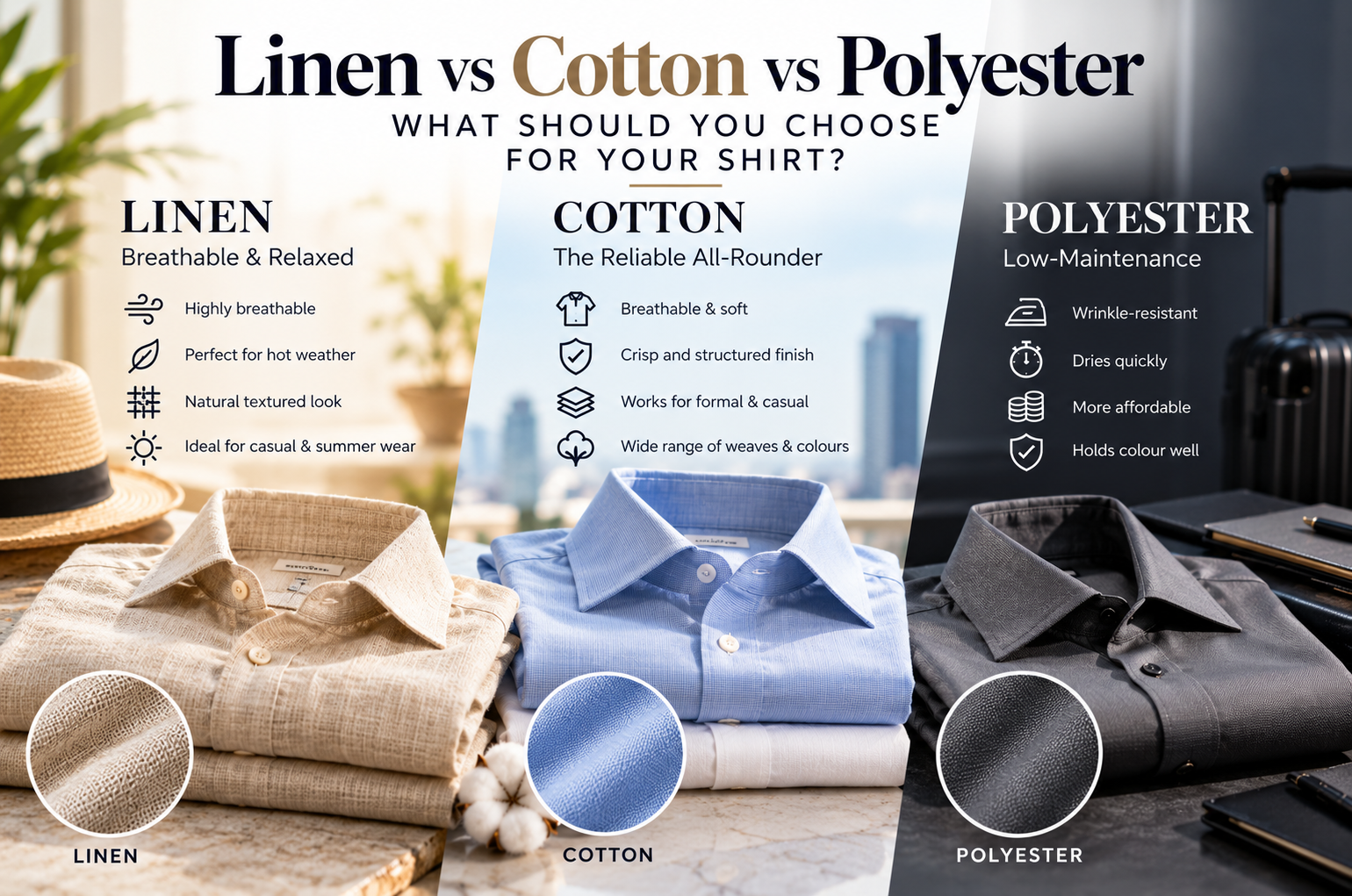
If you want one sentence before the full breakdown: cotton is the safest all-around choice for most shirts, linen wins for genuine heat and breathability at the cost of a wrinkled look, and polyester wins for low maintenance and wrinkle resistance at the cost of breathability and a slightly less natural feel against skin. Everything below explains why.
Linen: The Breathable, Relaxed Option
Linen is made from the fibres of the flax plant, and it is widely considered one of the most breathable natural fabrics available for clothing.
Strengths
- Exceptional breathability, making it genuinely comfortable in heat and humidity
- A naturally textured, relaxed look that suits casual and resort-style settings
- Gets softer and more comfortable with every wash over time
- A strong moisture-wicking natural fibre, helping it feel less damp in humid weather than many alternatives
Weaknesses
- Wrinkles heavily and visibly, even after short periods of wear
- Less structured than cotton, which can look too casual for strict formal settings
- Generally requires more careful laundering to avoid shrinking or excessive wear over time
Linen earns its reputation as a summer fabric specifically because of how well it breathes, but that same looseness of weave is exactly why it creases so easily.
Cotton: The Reliable All-Rounder
Cotton is the default fabric for most dress shirts for a reason: it balances comfort, structure, and formality better than almost any other natural fibre.
Strengths
- Breathable and soft against skin, suitable for both formal and casual settings
- Holds a crisp, structured finish well, particularly in weaves like poplin and twill
- Widely available in a huge range of weights, weaves, and finishes
- Takes dye and pattern printing cleanly, giving more colour and pattern options than linen typically offers
Weaknesses
- Wrinkles more than synthetic blends, though noticeably less than linen
- Can shrink if not laundered carefully, particularly lower-quality cotton
- Slower to dry than synthetic fabrics, which matters for travel or frequent washing
For a deeper look at the specific weaves, like poplin, Oxford, and twill, and what actually determines cotton quality beyond just thread count, our full fabric guide covering shirt materials goes into much more depth than this comparison covers.
Polyester: The Low-Maintenance Option
Polyester is a synthetic fibre, and it behaves in almost the opposite way to linen on most of the metrics that matter for a shirt.
Strengths
- Highly wrinkle-resistant, often requiring little to no ironing
- Dries quickly, which is useful for travel or frequent washing
- Generally more affordable than natural fibre equivalents
- Holds colour well over time and resists fading better than some natural fabrics
Weaknesses
- Breathes far less than cotton or linen, which can feel uncomfortable in heat or humidity
- Lacks the natural texture and feel that many people prefer against skin
- Can trap odour more than natural fibres, particularly with heavy wear
Polyester rarely appears alone in a quality dress shirt, but it shows up frequently in blends, where a small percentage is added specifically to reduce wrinkling without fully sacrificing the feel of natural fibre.
Linen vs Cotton: Head to Head
This is the comparison most people actually come here to settle. The honest answer is that neither fabric is universally better, since they solve different problems.
Choose linen when genuine heat and humidity are the main concern, and when a relaxed, slightly textured look fits the setting, such as a casual summer event or resort wear. Choose cotton when you need a more structured, polished look that holds its shape through a full workday, or when the setting calls for something closer to formal than casual.
A simple way to decide: if you would be upset to see visible creasing by midday, choose cotton. If staying genuinely cool matters more to you than a crisp appearance, choose linen.
Cotton vs Polyester: Head to Head
This comparison usually comes down to a trade-off between comfort and convenience.
Cotton breathes significantly better and feels more natural against skin, which matters over a full day of wear, particularly in warm weather. Polyester resists wrinkling far better and requires less upkeep, which matters more for frequent travel or a packed schedule with limited time for ironing.
For most everyday shirts, particularly dress shirts worn close to the body for extended periods, cotton remains the stronger overall choice. Polyester earns its place mainly in travel-specific shirts or budget-conscious basics where low maintenance outweighs breathability.
Linen vs Polyester: Head to Head
These two sit at opposite ends of the spectrum, and the comparison is really about which trade-off bothers you less.
Linen breathes exceptionally well but wrinkles heavily and needs more careful care. Polyester barely wrinkles and needs minimal care but breathes poorly and can feel uncomfortable in heat. For a hot, humid climate where comfort is the priority, linen wins clearly. For a low-maintenance travel shirt where appearance matters more than breathability, polyester is the more practical choice.
Which Fabric Fits Which Occasion
- Office and business settings: cotton poplin or twill, which hold a crisp, professional look through a full workday. For a deeper look at matching fabric formality to your specific workplace, see our business casual dress code guide.
- Hot, humid weather: linen or a linen-cotton blend, prioritizing breathability over a perfectly crisp finish.
- Travel and frequent packing: polyester or a cotton-polyester blend, since wrinkle resistance matters more than breathability when a shirt has to come straight out of a suitcase.
- Casual weekend wear: linen for warm weather, or a relaxed cotton Oxford weave for cooler months.
- Formal events: fine cotton poplin, which holds a clean, polished finish better than linen and feels more premium against skin than polyester.
Are Blended Fabrics the Best of Both Worlds?
Blended fabrics, particularly cotton-polyester and linen-cotton blends, exist specifically to soften the weaknesses of each individual fibre. A cotton-polyester blend keeps much of cotton’s breathability while picking up some of polyester’s wrinkle resistance. A linen-cotton blend keeps linen’s breathability while gaining a bit more structure and a less heavily creased look than pure linen.
Blends are not automatically better than a pure fabric; they are a deliberate trade-off. If you want maximum breathability, pure linen still outperforms a blend. If you want maximum wrinkle resistance, pure polyester still outperforms a blend. Blends exist for people who want a middle ground rather than the strongest version of either individual property.
Care and Maintenance Compared
How much time you want to spend ironing and laundering a shirt is often the deciding factor people underestimate when choosing a fabric.
- Lin generally needs to be ironed while still slightly damp for the best result, and it benefits from being hung immediately after washing to reduce deep creasing. It also tends to need a gentler wash cycle to avoid excessive wear over time.
- Coton handles a normal wash cycle well and irons easily, though a crisper finish usually calls for ironing while the fabric is still a little damp, similar to linen.
- Polyester is the easiest of the three by a clear margin. It typically needs no ironing at all, dries quickly, and tolerates a wider range of washing conditions without much risk of shrinking or losing shape.
If upkeep time is a genuine constraint in your routine rather than a minor inconvenience, that alone can reasonably tip the decision toward polyester or a polyester blend, even if cotton or linen would otherwise be the preferred choice.
Cost Comparison
Price varies by brand and quality within each fabric category, but some general patterns hold reasonably consistently. Polyester is typically the least expensive of the three, since it is a synthetic fibre produced at a large industrial scale. Cotton sits in the middle, with a wide price range depending on staple length and weave quality. Linen is generally the most expensive of the three, reflecting a more labour-intensive growing and processing method for the flax fibre itself.
Price should not be the only factor in the decision, since a cheaper shirt that gets worn rarely because it is uncomfortable in your climate is not actually good value, regardless of its upfront cost.
How to Choose for Your Next Custom Shirt
When building a shirt rather than buying one off the rack, fabric selection happens alongside fit and style choices rather than being an afterthought. Think through where you will actually wear the shirt most often, how much ironing or upkeep you realistically want to commit to, and the climate or season you are ordering for. From there, the comparisons above should make the choice reasonably straightforward rather than a guess.
You can build your own shirt and choose from available fabric options directly through our shirt builder, or explore combination options through the combo shirt builder if you are ordering more than one piece at once.
Questions fréquemment posées
Is linen or cotton better for a first custom shirt?
If this is your first order and you want maximum versatility across formal and casual settings, cotton poplin is generally the safer starting point. Linen is an excellent second piece once you know how much creasing you are comfortable with.
Does polyester ever belong in a quality dress shirt?
In small percentages within a blend, yes, usually to reduce wrinkling without fully sacrificing the feel of natural fibre. As the dominant fabric in a dress shirt, polyester is more commonly associated with budget basics or specific travel-focused pieces than premium formal wear.
Which fabric lasts the longest?
Cared for properly, all three can last for years. Cotton tends to soften and wear in attractively over time, linen becomes noticeably softer with each wash, and polyester tends to hold its original shape and colour longest with the least active care required.
Can I mix fabrics across my wardrobe rather than picking just one?
Yes, and this is generally the smartest approach. Owning a few cotton shirts for office and formal wear, one or two linen pieces for hot weather and casual settings, and perhaps one wrinkle-resistant blend for travel covers far more situations than committing entirely to a single fabric.
How do I know which fabric a shirt is actually made from before I order it?
Check the fibre content listed in the product or fabric description rather than relying on how the fabric looks in a photo. If you are building a shirt through a made-to-measure process, the fabric options should be clearly labelled by fibre type at the selection stage.
Is a cotton-linen blend a good compromise for someone who cannot decide?
Yes, it is a reasonable middle ground for exactly that situation. You get noticeably better breathability than pure cotton and a less heavily creased look than pure linen, at the cost of not fully maximizing either individual property.
Réflexions finales
The linen vs cotton shirt decision, and where polyester fits into the picture, ultimately comes down to matching fabric to how and where you will actually wear the finished shirt. Cotton remains the most versatile everyday choice, linen wins for genuine summer comfort, and polyester earns its place for low-maintenance travel pieces rather than everyday formal wear.
Ready to choose your fabric and build your next shirt? Explore Kavoo’s custom clothing collections to get started.