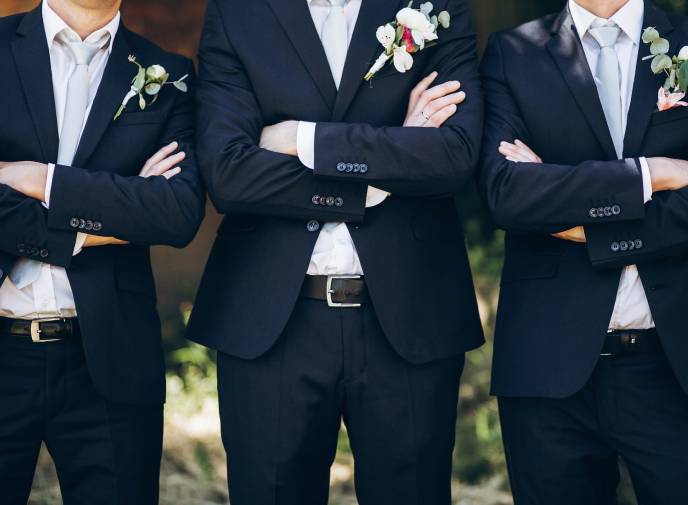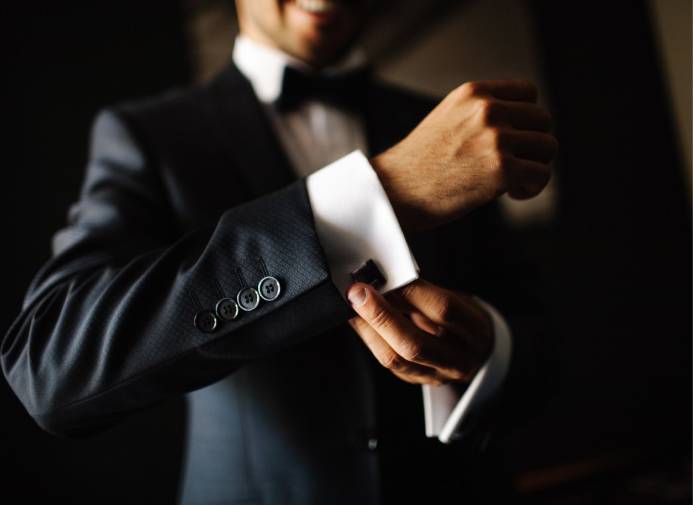
Most men choose a shirt by colour and fit, then find out months later that the fabric was the part quietly working against them: wrinkling after twenty minutes, feeling stiff by mid afternoon, or pilling after a handful of washes. Fabric is the one decision that affects how a shirt looks, feels, and holds up over its entire lifespan, which makes it worth understanding properly rather than leaving to guesswork.
This best shirt fabric guide breaks down the weaves, fibres, and blends you’ll actually encounter when choosing or ordering a shirt, so you can match material to occasion, climate, and how the shirt will genuinely be worn, rather than picking based on price tag alone.
Why Fabric Choice Matters More Than People Assume
Two shirts can look identical on a hanger and behave completely differently once worn. Fabric determines breathability, how visibly it creases through a working day, how it drapes on the body, and how it ages after repeated washing. A shirt built from the right fabric for its intended use tends to get worn constantly; the wrong fabric choice, however well cut, often ends up pushed to the back of the closet.
Understanding Shirt Fabric Weaves
Before fibre type, the weave is what gives a fabric its texture, weight, and finish. Two shirts made from the exact same cotton can look and behave completely differently depending on how that cotton is woven, so learning to recognize weave names is often more useful day to day than memorizing fibre science. These are the weaves you’ll see most often on shirt fabric labels:
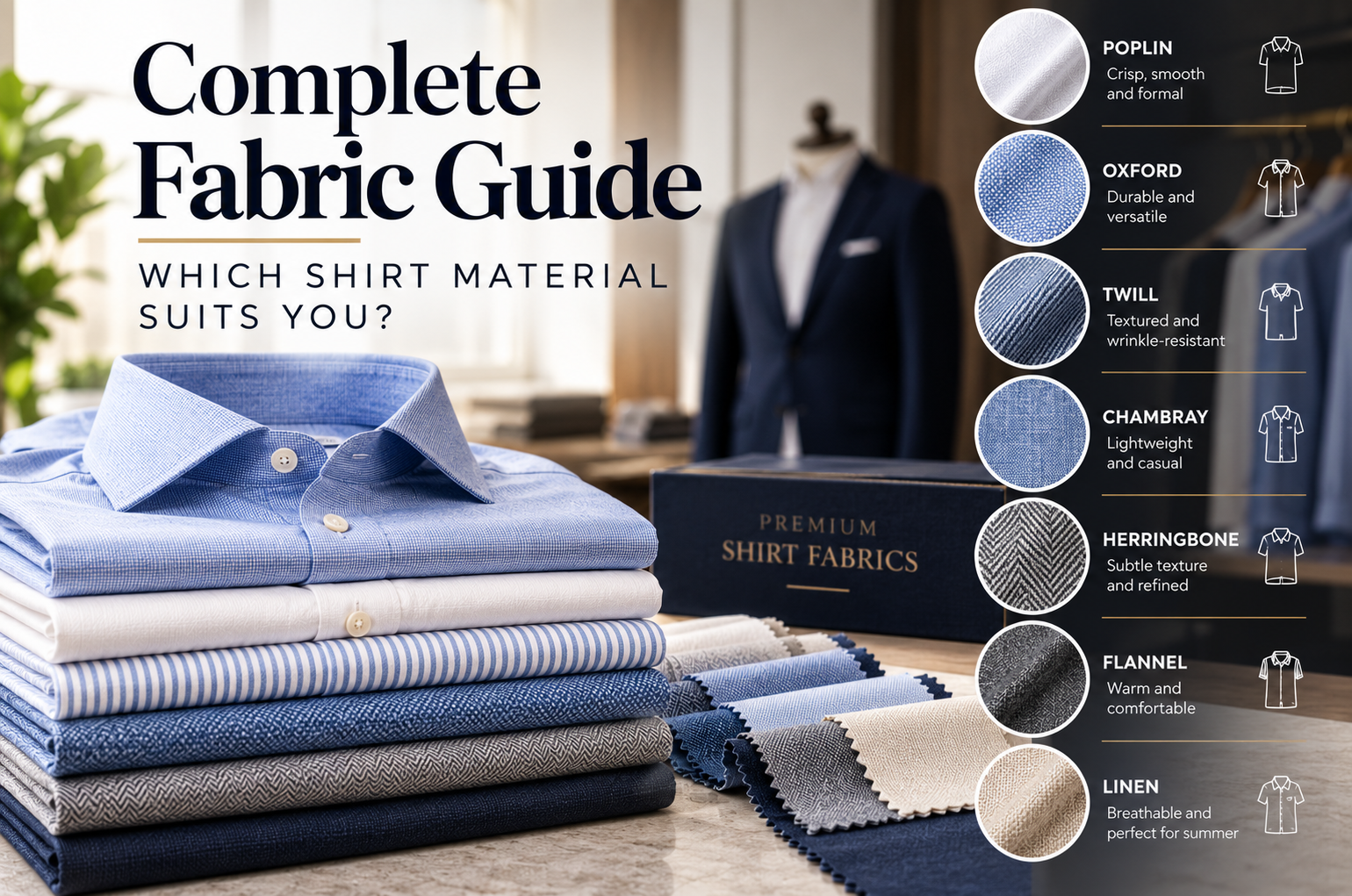
- Poplin: a tight, plain weave that produces a smooth, crisp finish. It is the standard choice for classic dress shirts because it looks polished and takes a clean press well.
- Oxford: a slightly heavier basketweave with visible texture. It has a more relaxed, casual look and holds up well to frequent wear, which is why it is common in button-down and weekend shirts.
- Twill: recognizable by its diagonal rib pattern, twill fabrics tend to hide wrinkles better than poplin and have a slightly heavier drape, making them a good choice for cooler months.
- Chambray: similar in appearance to denim but lighter and softer, chambray gives a casual, textured look that pairs well with smart casual outfits.
- Herringbone: a subtle V-shaped weave pattern that adds visual texture without looking overly casual, often used for shirts meant to sit between formal and everyday wear.
- Flannel: a brushed, soft weave that traps warmth well, making it a common choice for winter casual shirts rather than formal wear.
Cotton Quality: What Actually Determines It
Not all cotton behaves the same way, and the difference comes down to two things: staple length and thread count.
- Staple length refers to how long the individual cotton fibres are. Longer staple cotton spins into finer, stronger yarn, which generally means a softer feel and better durability over repeated washing.
- Thread count measures how many threads are woven into one square inch of fabric. Higher thread count usually means a smoother, denser finish, though very high numbers can sometimes trade breathability for smoothness, so it is not automatically better for every climate.
When comparing shirt options, it is more useful to ask about staple length and weave than to rely on thread count alone, since thread count by itself does not tell the full story of how a fabric will actually feel and perform.
Natural Fibres vs Blended Fabrics
Shirt fabric generally falls into three broad categories, each with a different set of trade-offs:
- 100% cotton: breathable, soft against skin, and the most common choice for both formal and casual shirts. It wrinkles more easily than blends but tends to feel the most comfortable over a full day.
- Cotton-polyester blends: more wrinkle-resistant and generally easier to care for, at some cost to breathability. Useful for travel shirts or situations where ironing access is limited.
- Linen and linen blends: exceptionally breathable and well suited to hot, humid weather, though linen wrinkles more visibly than cotton and suits a more relaxed, textured look rather than a crisp formal finish.
There is no single best fabric across all three categories; the right choice depends entirely on how formal the shirt needs to look and how much upkeep you are willing to put into it.
Matching Fabric to the Occasion
- Formal business and important meetings: fine poplin or a smooth twill in a solid colour or subtle pattern.
- Smart casual and everyday office wear: Oxford, chambray, or herringbone weaves, which read as put-together without feeling overly formal.
- Weekend and relaxed settings: heavier Oxford, flannel in cooler months, or linen blends in warm weather.
- Weddings and formal events: fine cotton poplin or twill in colours matched to the season and time of day.
Matching Fabric to Season and Climate
Fabric weight and fibre choice should shift with the season, particularly across a Canadian climate that swings between humid summers and genuinely cold winters. As a general guide, lighter, more breathable weaves like poplin, linen blends, and lightweight Oxford suit spring and summer, while heavier twill, brushed cotton, and flannel weaves are better suited to fall and winter layering. For a deeper breakdown of matching fabric weight to specific seasons and outdoor conditions, including for suits and jackets rather than shirts alone, see our dedicated guide: Tissus pour costumes saisonniers : Comment choisir la bonne matière pour chaque climat.
Fabric Care and Longevity
How a fabric is cared for affects its lifespan as much as the fabric quality itself. A few practical habits extend the life of most shirt fabrics:
- Wash in cool or lukewarm water rather than hot, which helps prevent shrinking and fading, particularly in dyed or patterned fabrics.
- Turn patterned or darker shirts inside out before washing to reduce surface fading.
- Avoid overloading the washing machine, since fabric rubbing against itself is a leading cause of pilling.
- Iron cotton while still slightly damp for a crisper, more even finish with less effort.
- Air dry when possible; high heat tumble drying is one of the fastest ways to break down natural fibres over time.
Common Fabric Myths, Debunked
- “Higher thread count always means better quality.” Weave, staple length, and finishing matter as much as thread count, sometimes more.
- “Blended fabrics are always lower quality than 100% cotton.” Blends are a different trade-off, not a downgrade; they simply prioritize easy care over breathability.
- “Wrinkling means poor quality.” Some of the most breathable, comfortable fabrics, like linen, wrinkle by nature. Wrinkling reflects fibre type, not fabric quality.
- “All Oxford fabric is casual.” Finer Oxford weaves in solid colours can sit comfortably in smart casual and even some business settings, depending on the cut and finishing.
How to Read a Fabric Label or Product Description
Online shirt listings often describe fabric in a short line that is easy to skim past, but it usually holds most of the information you actually need. A typical description might read something like “100% cotton, poplin weave, 120 thread count.” Breaking that down: the fibre content tells you breathability and softness, the weave name tells you texture and formality level, and the thread count is a secondary detail worth checking only after the first two.
- Look for the fibre content first: cotton, linen, a cotton blend, or a specific named blend.
- Then check the weave name against the list earlier in this guide to understand texture and formality.
- Treat thread count as a tiebreaker between two otherwise similar options, not the primary decision factor.
- If care instructions are listed, weigh them against how much upkeep you are realistically willing to do; a fabric that requires ironing after every wash is a different commitment than one that does not.
Choosing Fabric for Your Custom Shirt
When ordering a made-to-measure shirt, fabric selection happens alongside your fit and style choices rather than afterward. Think through where you will wear the shirt most often, how much ironing or upkeep you realistically want to do, and the season you are ordering for, then choose weave and fibre accordingly rather than defaulting to whichever option is listed first.
You can browse fabric options directly through our combo shirt builder, explore the wider Men’s Root Collection, or see our step-by-step dress shirt guide for how fabric fits into the full design process.
Confirm the exact fabric options and names currently listed in the live shirt builder before publishing, so the weave and fibre terms used here match what customers actually see and select on-site.
Questions fréquemment posées
What is the best all-around fabric for a dress shirt?
Fine cotton poplin is generally the safest all-around choice: breathable, smooth, and appropriate for most formal and business settings across the year.
Is a higher price always a sign of better fabric?
Not necessarily. Price often reflects finishing, weave complexity, and branding as much as raw fabric quality. Staple length and weave tell you more about actual performance than price alone.
Which fabric wrinkles the least?
Cotton-polyester blends and finer twill weaves resist wrinkling better than pure cotton poplin or linen. If low-maintenance care matters more to you than breathability, a blend is worth considering.
Can I mix fabric weights within the same wardrobe?
Yes, and it is generally a good idea. Owning a mix of lighter poplin or linen blends for summer and heavier twill or flannel for winter covers the full range of a Canadian climate better than one fabric weight worn year round.
How do I know if a fabric will feel comfortable before I order it online?
Check the fibre content and weave name listed with the fabric, and compare it against the categories in this guide. If a physical swatch or sample service is available, requesting one before ordering is the most reliable way to judge feel firsthand.
Is linen a good choice for a first custom shirt?
Linen is an excellent choice for warm weather and casual settings, but if this is your first custom shirt and you want maximum versatility across formal and casual occasions, a fine cotton poplin is generally the safer starting point, with linen as a strong second piece once you know your preferences.
Réflexions finales
Fit gets most of the attention when people talk about custom clothing, but fabric is doing just as much work behind the scenes, quietly shaping how a shirt feels by noon, how it photographs, and how many years it stays in regular rotation. Using this best shirt fabric guide as a starting point, match weave and fibre to how and when you will actually wear the shirt, and the rest of the decision becomes far easier.
Ready to choose your fabric and build your next shirt? Explore Kavoo’s custom clothing collections to get started.